Back To Blog
 The most customizable model is not automatically the best. It can be an expensive way to discover that customers did not want the product.
For most ecommerce sellers, use white label to test an offer, move to private label when customer evidence points to specific changes, and choose ODM when the product needs a supplier-developed functional advantage. A new logo does not create a moat, but neither does a custom design launched before demand is proven.
Suppliers do not use these terms consistently. Private label describes whose brand is on the product and may imply exclusivity; ODM describes who developed the design. One product can be both. The quotation heading matters less than the agreement's rights, specifications, and responsibilities.
Quick decision: Use white label to validate the offer, private label to fix a proven complaint, and ODM when the feature itself is the strategy.
What the three models actually mean
Each model starts from a different product foundation. It determines what you can change, how quickly you can learn, and what competitors may also buy.
| Model | Product starting point | Typical seller input | Best use |
|---|---|---|---|
| White label | Finished supplier product | Logo, label, packaging, bundle | Fast offer or channel validation |
| Private label | Existing product or production platform | Brand-specific specifications, materials, features, packaging | Differentiation based on proven customer needs |
| ODM | Product designed by the manufacturer | Market brief, selected functions, adaptations, approvals | Functional differentiation without an in-house engineering team |
Separate the brand model from the design source
White label is the narrowest commitment. The supplier can usually offer the same base item to other sellers, so your advantage comes from positioning, content, service, bundling, or distribution.
Private label gives your brand more control, but it does not guarantee a unique product. An agreement may cover an exclusive formula, changed material, special accessory set, or only the packaging. Ask what is exclusive, where, and for how long.
ODM shifts more design work to the manufacturer. You start with the supplier's product architecture rather than a complete engineering package of your own. The supplier may still own the platform, tooling, firmware, or underlying design. Treat ODM as a development arrangement, not a promise of ownership.
Match the model to the uncertainty
Choose the model that answers your most important unanswered question. Sellers waste money when they solve a product problem while their real uncertainty is demand, or test a generic item when customers already want a better product.
Use white label to test the offer
White label fits when you still need to learn who buys, which message converts, what price the market accepts, or which sales channel works. The product should already perform its basic job well; your experiment concerns the commercial offer around it.
This model works poorly when buyers compare the item feature for feature. If five sellers use the same specifications and accessories, advertising and discounting become the easiest ways to compete. Improve the bundle, instructions, warranty experience, or niche positioning before assuming a logo will support a premium.
Set a learning goal before ordering. The launch should prove a customer segment, use case, price range, or acquisition channel. Otherwise, speed only accelerates inventory risk.
Use private label to fix a known complaint
Private label becomes useful after reviews, returns, support tickets, and repeat purchases reveal a consistent need. Perhaps customers want a stronger hinge, a quieter motor, clearer instructions, a travel case, or packaging that survives parcel delivery. Those are product requirements, not decoration.
Write every change as a measurable specification. “Premium material” should become a grade, thickness, finish, and acceptance criteria. “Better packaging” should become dimensions, protective structure, a test method, labeling, and an approved sample.
The best private-label change removes a purchase objection or recurring cost. It should improve conversion, reduce returns, sharpen positioning, or create a useful bundle. If customers cannot notice it and operations cannot measure it, the change will struggle to repay its cost.
Use ODM when the feature is the strategy
ODM fits when your opportunity depends on function, industrial design, electronics, firmware, or a product architecture that your team cannot develop alone. You bring the customer problem, use environment, target performance, and commercial constraints; the manufacturer turns that brief into a manufacturable product.
That collaboration creates dependency. Confirm who controls tooling, source files, firmware updates, component substitutions, test reports, and future versions. If critical components can change without approval, your “custom” product can drift after the first batch.
ODM is strongest when your brief contains a defensible customer insight. “Make something innovative” usually produces a catalog variation. Specify the user problem, required outcome, failure conditions, and price boundary.
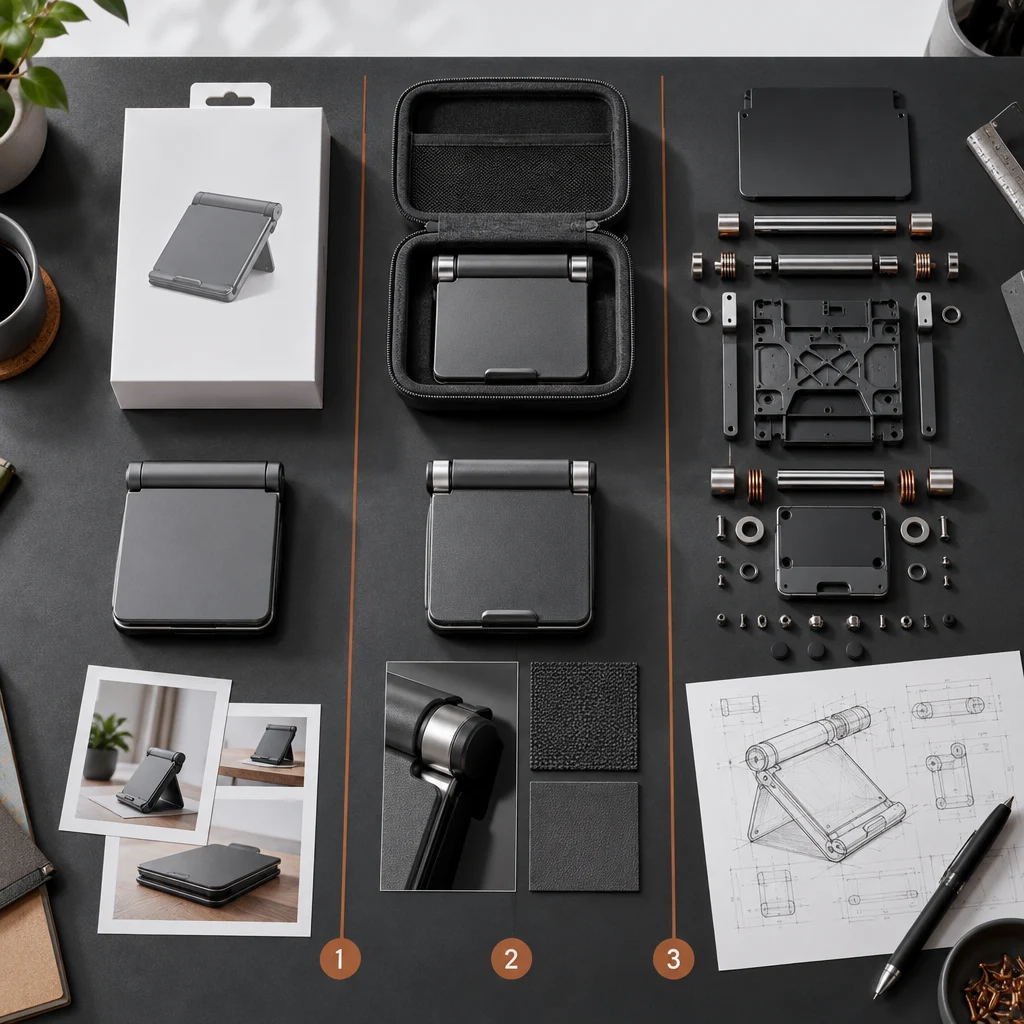
Compare total risk, not the quoted unit price
The cheapest quotation can carry the highest business cost. Compare cash exposure, learning speed, and operational burden together.
Count development and operating costs
| Decision factor | White label | Private label | ODM |
|---|---|---|---|
| Launch speed | Usually fastest | Moderate | Usually slowest |
| Product control | Low | Medium to high | High within the agreed platform |
| Differentiation | Mostly outside the product | Product and brand | Function, design, and brand |
| Development spend | Low | Moderate | Highest of the three |
| Main risk | Price competition | Paying for weak changes | Technical, IP, and supplier dependency |
Model contribution margin after samples, tooling, packaging, testing, inspection, returns, warranty support, compliance, and inventory holding. White label can win with a lower margin if it produces reliable learning and turns inventory quickly. ODM justifies more development only when the feature supports a durable price, conversion, retention, or cost advantage.

Break down MOQ by change
MOQ is not a model definition. A catalog product may have a low minimum while custom colors, packaging, or components require more units. Request a change-by-change cost and quantity breakdown instead of one “private-label MOQ.”
Branding does not outsource responsibility
Putting your name on a product may change your legal role. European Union guidance can treat a business selling under its own name or trademark as the manufacturer. In the United States, importers and private labelers also appear in certification, reporting, and traceability rules. Duties depend on the product and market.
Build compliance into model selection. Cosmetics, children's products, wireless devices, appliances, and pet accessories have different evidence requirements. Verify the production model, materials, warnings, labels, reports, and responsible entities for each market.
Customization can also invalidate existing evidence. A new battery, coating, radio module, charger, material, or use claim may require a technical review or new testing. The product-lifecycle obligations become especially important when software, connectivity, or safety-critical components continue changing after launch.
Compliance checkpoint: Match every report, warning, label, responsible entity, and certification to the exact production version and target market. Custom branding does not transfer these duties back to the supplier.

Put these seven questions in the supplier brief
Supplier terminology becomes useful only after the operating details are clear.
Define control before price
- What can other customers buy? Identify the shared product, protected changes, territory, channels, and exclusivity period.
- Who owns each asset? Separate the brand, packaging artwork, product design, tooling, firmware, source files, test data, and improvements.
- Which specification controls production? Attach drawings, materials, tolerances, approved samples, packaging standards, and acceptance tests.
- What may change without approval? Require notice and written approval for critical components, materials, factories, processes, and software.
Plan for change and failure
- Which compliance evidence matches this version? Check model numbers, revisions, target markets, applicants, manufacturers, and report scope.
- What happens when units fail? Define inspection, defect handling, corrective action, replacement, warranty, spare parts, and recall cooperation.
- Can the product survive a supplier exit? Set rights to retrieve tooling, files, materials, inventory, and documentation at termination.
WIPO guidance makes the ownership issue explicit: background IP, newly created IP, supplier use rights, confidentiality, assignment, and termination belong in writing. Paying a development fee does not prove that you own the result.
EJET Selection's product development and validation support can connect low-MOQ testing with private-label or ODM development. Validate the need first, then spend on the difference customers value.
Build a model ladder, not a permanent identity
A seller does not need to remain a white-label, private-label, or ODM business forever. Use each model as a stage gate.
Start with white label when the offer is unproven. Move to private label after real customer behavior identifies a worthwhile change. Move into ODM when repeated demand supports a feature advantage and the business can manage development, compliance, quality, and after-sales support. Some products should remain white label because speed and assortment matter more than exclusivity; others deserve deeper investment.
The best model is the smallest commitment that produces the next valuable answer. Before requesting a quote, write down the uncertainty you need to remove. If the supplier's proposal adds cost without making that answer clearer—or adds control without granting enforceable rights—choose a simpler model.
Frequently asked questions
What is the main difference between white label, private label, and ODM?
White label starts with a finished supplier product and changes branding or packaging. Private label adds brand-specific product requirements. ODM uses a manufacturer-developed product platform to create deeper functional or design differentiation.
Is private label always unique to one seller?
No. Private label describes the brand relationship, not guaranteed product exclusivity. The contract must state which formula, material, feature, tooling, packaging, territory, channel, or time period is exclusive.
When should an ecommerce seller choose white label?
Choose white label when the biggest uncertainty is commercial: who buys, which message converts, what price works, or which channel performs. It offers speed and lower development exposure while you validate the offer.
When is ODM the better choice?
ODM is appropriate when a defensible opportunity depends on function, industrial design, electronics, firmware, or another capability the seller cannot develop in-house. The agreement must clarify ownership, tooling, updates, substitutions, test reports, and future versions.
Does customization change compliance responsibilities?
It can. New batteries, coatings, radio modules, chargers, materials, or use claims may invalidate existing evidence or require new testing. Selling under your own brand may also change your legal role, depending on the product and market.